
One record of the subscriber
Billing, CRM, tickets, inventory and the network stop living in separate tools and separate spreadsheets. Change an address once.
Subscribers, billing, M-Pesa, MikroTik and RADIUS in one platform — the operating system for modern ISPs. Built for operators from 50 subscribers to 10,000.
MikroTik-first · M-Pesa built in · Set up yourself in an afternoon
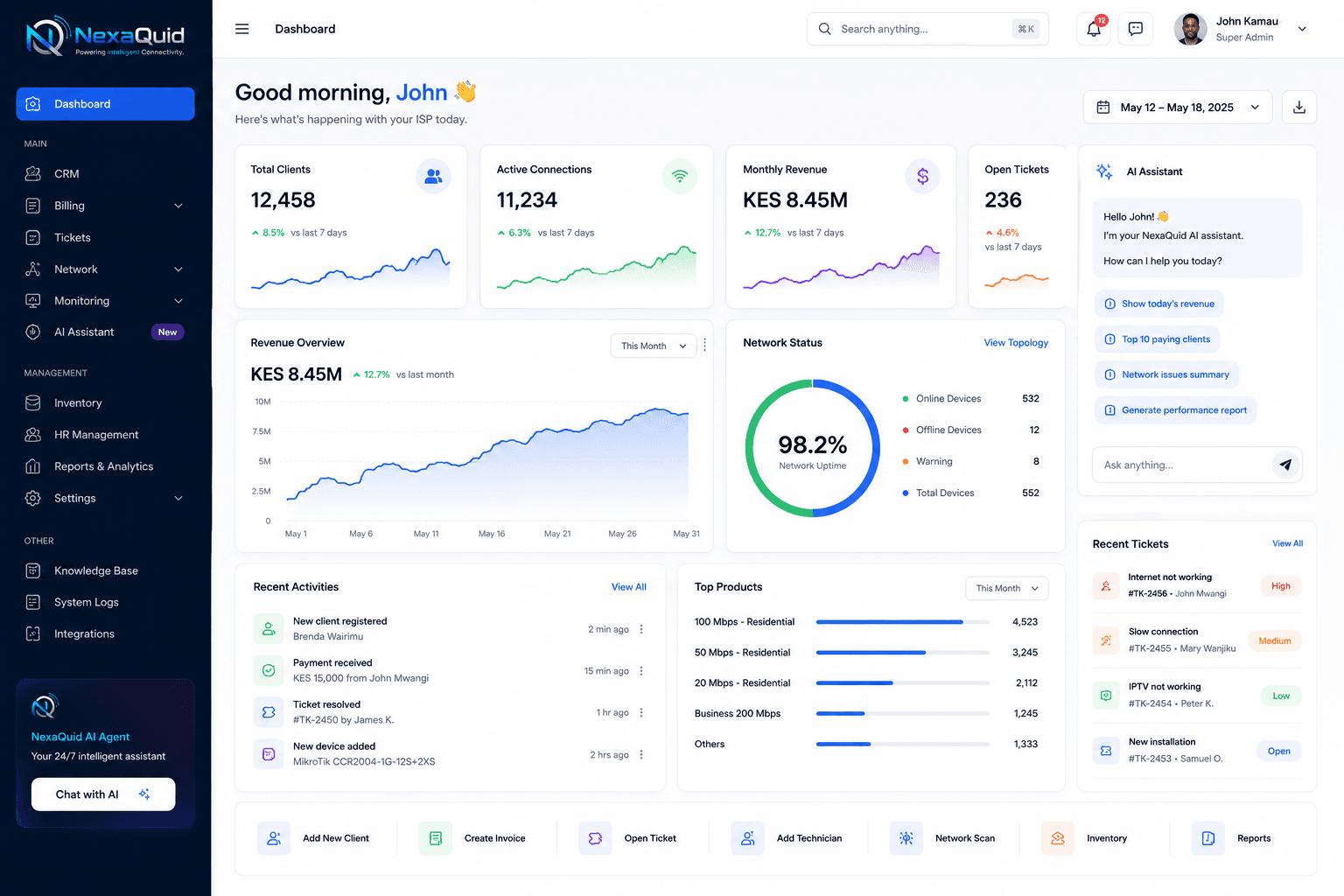
Nairobi Metro · 12 POPs · live
Active subscribers
4,812
Monthly revenue
$186.4k
Open tickets
37
Network uptime
99.98%
Bandwidth utilisation
8.4 Gbps peakTicket status
142
total
Live ticket queue
View allSpeaks to the gear and rails you already run
Works with MikroTik, RouterOS, FreeRADIUS, M-Pesa Daraja, Safaricom, Huawei OLT, GPON / FTTH, PPPoE, Hotspot, Static IP, Africa's Talking, Resend.
NexaQuid is ISP management and billing software for internet service providers in Kenya and across Africa, combining subscriber billing, M-Pesa payments, MikroTik and RADIUS provisioning, hotspot vouchers, ticketing and network monitoring in one multi-tenant platform.
Billing, CRM, tickets, inventory and the network stop living in separate tools and separate spreadsheets. Change an address once.
Paybill and STK Push callbacks match on your own account-number format, settle the invoice, and reconnect the line through RADIUS without anyone touching a router.
Not a WHERE clause someone can forget. Postgres row-level security, a restricted runtime role, and cross-tenant tests written as attacks.
Import your subscribers, paste one generated script into your MikroTik, connect your paybill. No consultant, no professional-services invoice.
Same hour
Payment to reconnection
A subscriber pays by M-Pesa and the line comes back on the next authorisation — not when somebody next opens the router.
Zero
Manual invoice runs
Invoices are raised on your own billing day, per subscriber, with your VAT treatment and your numbering. The run is idempotent, so it cannot double-bill.
One paste
MikroTik setup
NexaQuid generates the RouterOS configuration for your hotspot, RADIUS client and walled garden. You paste it in blocks and it prints back what it built.
Subscribers, billing, payments and network operations share one focused workspace. Dark and light themes stay calm through long shifts.
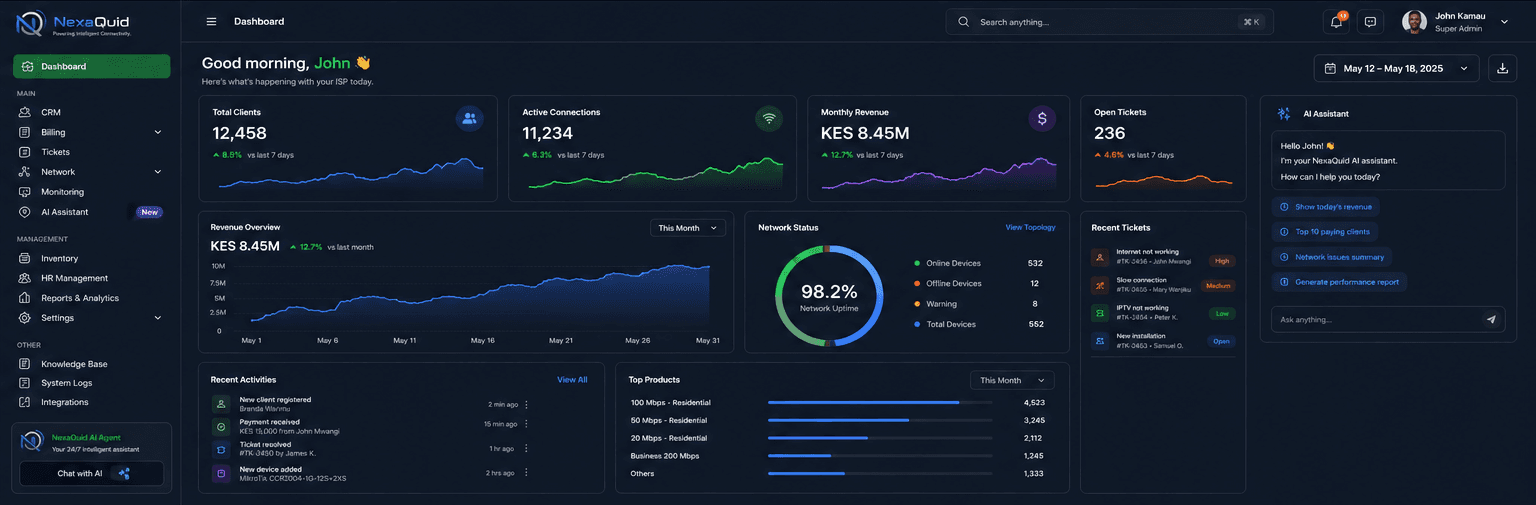
Themed per tenant — your colours, your logo, your subscribers’ experience.
Ten modules are live today. Four more are in the roadmap and labelled as such — here and in the product.
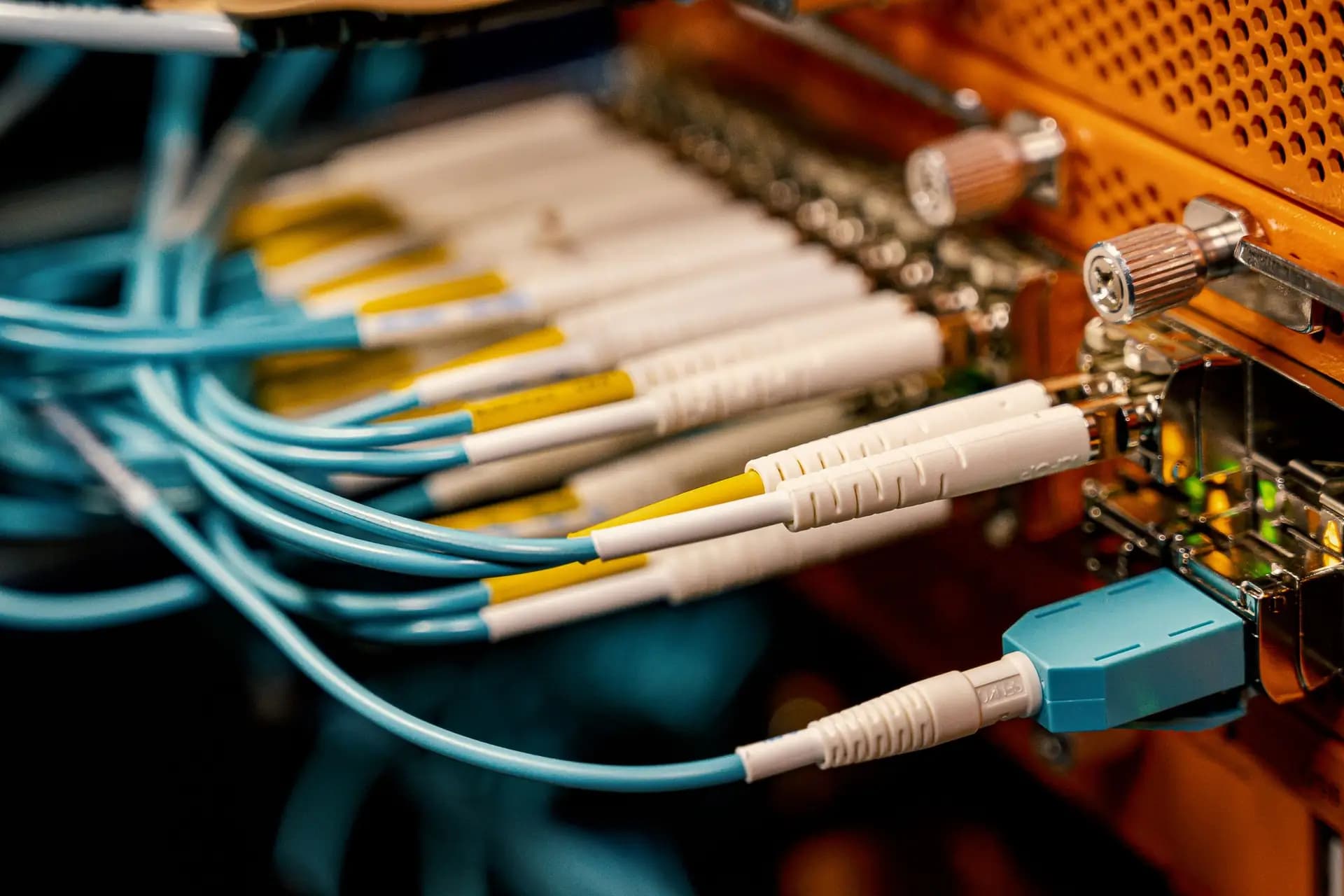
Built for real networks
NexaQuid is built with ISPs, in the field — where reconnections happen at midnight, fibre gets cut by a digger, and the billing run cannot wait for anyone.
If yours is not here, the fastest answer is a thirty-minute call with someone who has run a network.
NexaQuid is ISP management and billing software for internet service providers in Kenya and across Africa. It combines subscriber management, recurring billing, M-Pesa payments, MikroTik and RADIUS provisioning, hotspot vouchers, ticketing with SLA tracking, inventory and a branded subscriber portal in one multi-tenant platform.
Pricing is per active subscriber per month, in bands. Up to 100 subscribers is a flat KES 3,500 per month. From 101 to 500 subscribers it is KES 32 per active subscriber, from 501 to 2,000 it is KES 26, and from 2,001 to 10,000 it is KES 20. Above 10,000 subscribers is quoted individually. MikroTik routers, staff accounts and tickets are never metered.
Nothing happens to your network. Your subscribers stay connected, billing keeps running and your portal stays up. We email you and give you time to clear the balance. NexaQuid does not disconnect an ISP's paying customers over its own invoice.
Yes. Connect your own Safaricom Daraja paybill and C2B confirmations are matched to the account number the payer typed, allocated to the outstanding invoice, receipted, and the subscriber's line is reconnected through RADIUS. Subscribers can also pay from the portal with an STK Push prompt. A payment that cannot be matched with certainty waits in a queue for a person rather than being guessed at.
Yes, MikroTik-first. FreeRADIUS authorises PPPoE, hotspot and static-IP sessions, and NexaQuid generates the RouterOS configuration for your RADIUS client, hotspot server, DHCP and walled gardens so you paste it in rather than working it out. Suspension and reconnection happen in the database and take effect on the next authorisation, with no router edit.
You can set it up yourself. Import your subscribers from a CSV, paste one generated script into your MikroTik, connect your paybill, and switch on the message templates you want. Every step is documented and self-serve. Our support team will do the migration with you for a small one-off fee if you would rather not.
Yes. A subscriber rates the ticket when it is resolved, and those ratings are reported per technician and per category. SLA timers for first response and resolution run against your own targets, and a breach is visible before it happens rather than after.
Yes. Your logo, colours, domain and favicon apply across the staff console, the subscriber portal, the captive portal and your invoice and receipt PDFs. Documents retain one “Powered by NexaQuid” attribution line.
Yes, and it is enforced in the database rather than in application code. Every tenant-scoped table carries a Postgres row-level security policy, requests are served by a restricted role that cannot bypass it, and cross-tenant access is covered by tests written as attacks. Dedicated-database and on-premise deployments are available where stronger guarantees are required.
Yes. A branded captive portal sells passes to walk-in devices, paid by M-Pesa in about thirty seconds, with vouchers that are hashed and shown once. A second hour stacks onto the live one rather than replacing it, and walk-ins never become subscriber records.
NexaQuid is built for Kenya first and designed for East Africa and the wider African market — M-Pesa, KES and East Africa Time are first-class rather than adaptations. ISPs elsewhere can run it with their own payment channel and currency.
Most ISPs between 50 and 2,000 subscribers are live on billing, payments and RADIUS within a few days, and many in an afternoon. The longest step is usually agreeing your account-number format and package list, because those are decisions rather than data entry.
Thirty minutes, your subscribers and your routers as the example. We will tell you plainly what is built and what is not.
supportnexaquid@gmail.com